
Intelligent Process Automation – What is it and how can it Help Your Business?

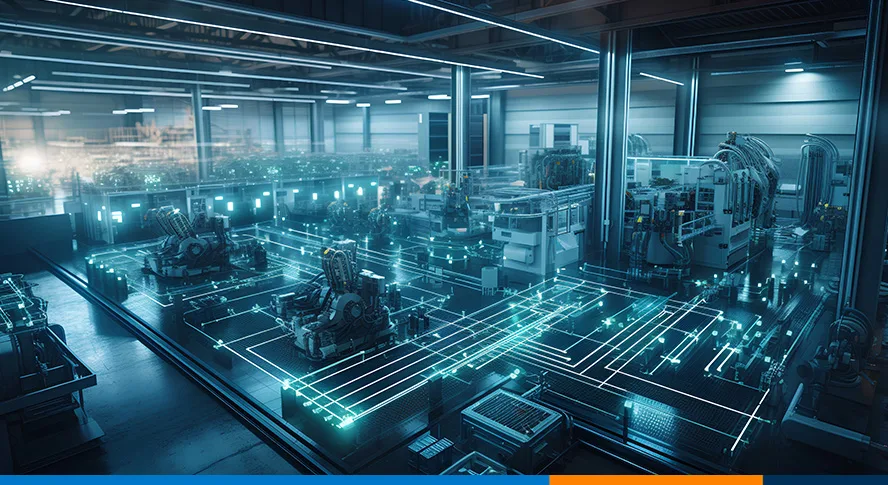
You’ve probably encountered intelligent process automation, even if you didn’t realize it. You may have taken out an insurance policy online, or opened a bank account without speaking to a representative. Even paying at a self-service checkout in the supermarket is a process automated using technology. But, what exactly is smart process automation?
What is intelligent process automation?
Intelligent process automation involves a range of technologies that are used to integrate, automate and manage digital operations. Using software, process automation capabilities are combined with machine learning and artificial intelligence (AI), which make up the “intelligent” part. This automation has already arrived in many companies, but others are just beginning the journey toward effectively automating previously manual processes.
Which technologies make process automation intelligent?
The “intelligent” part of process automation lies in the various technologies used to gather, process and structure often enormously large amounts of data in a meaningful way. Here are a few of the technologies used to build intelligent process automation solutions.
Robotic process automation (RPA)
Robotic process automation mimics the way humans interact with computer programs. By using programmable software robots or “bots”, routine tasks can be carried out automatically and employees can dedicate their time to other tasks. The applications for RPA range from form processing and data retrieval to the operation of complex electronic systems. An interesting example are the harvesting robots made by advanced.farm, which take on the tedious and strenuous work of harvesting strawberries in California.
Digital process automation (DPA)
Digital process automation refers to the digitization of systems and processes as well as the automation of information transfer. DPA can assist in providing users with access to all the data and information they need to perform their tasks. This optimizes workflows that were previously based on human interactions.. DPA is an evolution of classic Business Process Management (BPM), but focuses on improving the customer experience as well as the interactions between customers, suppliers and partners.
Artificial Intelligence (AI)
Not every process that needs to be automated requires artificial intelligence. However, machine learning or deep learning, computer vision and natural language processing (NLP) can usefully complement intelligent process automation. RPA handles repetitive activities that do not require a learning or thinking component. In contrast, AI can also cover areas where, for example, large amounts of data need to be analyzed and structured or compared.
Which processes can be automated?
Often, processes that are time-consuming and repetitive, or that tie up capacity among employees will be automated. Intelligent process automation is therefore suitable for the following types of tasks:
Time and resource-intensive, as well as error-prone manual tasks (with Robotic Process Automation, RPA)
Repetitive and predictable workflows (rule-based decisions by Machine Learning (ML)
Workflows that have little personalization or very general technical standards and specifications (compliance, invoice processing)
Text-heavy communications (natural language processing (NLP)
Customer service (cognitive agents)
Real-time tracking of transfer between systems and teams (smart workflows)
Benefits of Automation
As outlined above, intelligent process automation comes with a number of benefits for businesses, including:
Lower operating costs
Improved communication within the organization
Higher productivity
Higher quality of work and/or products
Smart automation powered by OnLogic computers
The heart of an automation project is the hardware that performs the data processing. Because they’re used in every environment, from dusty manufacturing to frosty cooling warehouses, computers used for process automation have to endure a lot. OnLogic offers automation computers designed specifically for this purpose. Have questions about your project? Contact our team for help choosing and configuring the perfect industrial computer.
